2022 - Universities

  • How to List Education on Your Resume

    Did you know that the first thing an employer looks at in your resume 2023 is your education? Why? Education is vital for many reasons. It helps people to develop critical thinking skills, gain knowledge about the world around them, and learn how to solve problems. It also helps to promote self-discipline and good work habits. Perhaps most importantly, it provides opportunities for people to advance their careers and improve their lives.

    The Types of Education

    A college degree is not the only type of education one can receive. In addition to completing academic coursework at a university, there are other options, such as trade schools, online courses, and community colleges. Each type of educational institution has its advantages and disadvantages. 

    For example, trade schools typically provide students with more hands-on experience than traditional colleges. Online courses offer greater flexibility in scheduling and location, but they may not be as comprehensive as brick-and-mortar classes. Community colleges are often more affordable than four-year universities but may not offer as many specialized programs. Ultimately, the best educational path for each individual depends on their unique needs and goals.

    Education on your Resume

    It’s no secret that a good education can open doors. But when it comes to writing your resume, you might be wondering how to best showcase your hard-earned degrees and transcripts. We know how.

    How to list education on your resume

    The first step is to decide which educational information is most relevant to the job you’re applying for. Be sure to include the name of the school, the location, the degree you earned, and all relevant coursework or honors. 

    Finally, don’t forget to proofread your resume before sending it off. A few simple spelling and grammar errors could mean the difference between landing an interview and getting passed over entirely. With some care and attention, you can ensure that your educational background will help rather than hurt your chances of getting hired.

    Decide what to include in your education section

    It should include the name of any post-secondary institutions you attended and the degrees or diplomas you earned. You can list your expected graduation date if you are still a student. You can also mention any relevant coursework, honors, or awards you received during your studies. 

    You may ignore your education section if you have significant work experience. However, if you are a recent graduate or your work experience is unrelated to your desired field, your education can help demonstrate that you have the skills and knowledge necessary for the job.

    Put your education in the right part of your resume

    One common mistake is putting their education in the wrong place on their resume. While your educational background is essential, it should generally be listed after your work experience. Otherwise, your education will be the first thing the employer sees, and they may not even read the rest of your resume.

    Format your education section properly

    Regarding formatting your education section, there are a few key things to remember. First, include all relevant information, such as the name and location of your school, the dates you attended, and the degree or degrees you earned. Next, use consistent formatting, such as listing your schools in reverse chronological order or using bullet points. Finally, avoid plagiarism by including only information that is accurate and up-to-date.

    What employers look for in the education section of your resume

    When reviewing resumes, employers look for certain critical information in the education section. They want to see the name and location of the school you attended and your degree or program of study. They may also want to know your GPA, especially if you’re a recent graduate. 

    If you have relevant coursework or certifications, include those as well. Employers are also interested in your level of education. A master’s degree or higher will undoubtedly set you apart from other candidates. However, even if you don’t have an advanced degree, you can still highlight your college coursework and any special programs you participated in.

    How to list completed education (with example)

    Your education section is the place to show off your academic credentials. The most important thing to remember is to list your completed education in reverse chronological order. 

    Start with your highest degree and work your way down. For each degree, include the name of the institution, the location, the date you graduated (or are expected to graduate), and your major and minor. If you took any relevant coursework, you could also list that information here. For example:

    B.A. in English, Smith College, Northampton, MA (expected May 2020)

    Relevant coursework: British literature, introduction to creative writing, advanced grammar and composition

    A.A. in Liberal Arts, New York College, New York, NY (May 2018) 

    GPA: 3.8/4.0

    Relevant coursework: Introduction to psychology, US history since 1877, composition and rhetoric

    In this example, it is essential to include the name of the institution and its location. You should also list the coursework you took related to the job you are applying for. Finally, include your GPA if it is 3.0 or higher. If you have any other academic achievements or awards, you can also list them here. 

    Phi Beta Kappa Society Member 

    Highest Honors in English  

    Commonwealth Honors Scholar 

    Dean’s List all semesters

    How to list incomplete or in-progress education (with example)

    It is not uncommon for job seekers to have primary or ongoing education, and there are a few different ways to list this information on a resume. One option is to list the name of the institution and the expected graduation date. For instance: 

    ” XYZ University, expected graduation date May 2020.” 

    Another option is to include the number of credits completed: 

    “XYZ University, 60 credits completed.” 

    If you have completed a significant amount of coursework but do not yet have a degree, you can list your major: 

    “XYZ University, major in psychology.”

    Whichever approach you choose, be sure to include relevant coursework that demonstrates your skills and knowledge in the field. For example, if you are applying for a position in marketing, you would want to highlight any courses you have taken in marketing or advertising. By providing this information upfront, you can avoid confusion or misunderstanding later.

    Tips for Listing Degrees (College, High-School, GED)

    Most employers will want to see at least some evidence of formal education on your resume, so it’s essential to know how to list your degrees correctly. Here are a few tips:

    Adding High School and GED on Resume

    Generally, if you have no work experience, it’s worth including your high school diploma or GED on your resume. This will show employers that you have at least completed high school (or the equivalent) and are eligible for most jobs.

    Of course, there are always exceptions to the rule. If you graduated from a prestigious high school or earned an excellent GPA, you may want to include this information even if you have work experience. Ultimately, it’s up to you to decide what to include on your resume; just be sure not to leave anything off that could give you an edge over other job seekers.

    Adding Associate’s and Bachelor’s Degrees on Resume

    While certain jobs require a specific level of education, in many cases, hiring managers are simply looking for candidates who have the potential to grow and succeed within their company. 

    Adding an associate’s or bachelor’s degree to your resume shows that you are committed to your personal development and willing to invest in your future. In addition, having a degree from an accredited institution gives you an instant leg up over candidates who do not have a formal education.

    Adding Graduate School or Doctoral Programs on the Resume

    Adding a graduate program or doctorate to your resume may be just the boost you need to set yourself apart from the competition. Depending on your field, having a higher degree can show employers that you are passionate about your chosen career and have the dedication to see it through. 

    Listing a graduate school or doctoral program on your resume can signal to potential employers that you are committed to lifelong learning and willing to invest in your professional development. You can also list the expected completion date on your resume if you are currently enrolled in a graduate or doctorate program.

    Adding Certifications on Resume

    If you’re looking to stand out from the competition, one way to do that is by adding certifications to your resume. Professional certifications can show potential employers you have the skills and knowledge necessary to excel in the role. They can also demonstrate your commitment to professional development and lifelong learning. 

    If you’re unsure which certifications would be most beneficial for you, consider talking to a career counselor or researching popular credentials in your field. Once you’ve decided which ones to pursue, add them to your resume in a straightforward way for employers to understand. 

    Listing Incomplete Education on Resume

    What do you do if you haven’t finished your degree? Is it better to list your incomplete education on your resume or leave it off? There are a few things to consider when making this decision. 

    First, think about the type of job you’re applying for. If the job requires a specific degree or level of education, then you’ll need to list your incomplete degree on your resume. Even if you don’t have all the necessary credentials, listing your unfinished degree shows that you’re working towards meeting the job requirements.

    However, if the job doesn’t require a specific degree, then you may be better off leaving your incomplete education off your resume. In this case, focus on highlighting your skills and experience that are relevant to the job.


  • The most famous educational institutions of the United Kingdom are Cambridge and Oxford universities.

    The most famous British universities are the University of Oxford and the University of Cambridge. These two universities have a long history of academic excellence and have produced some of the world’s most influential scholars of all time.

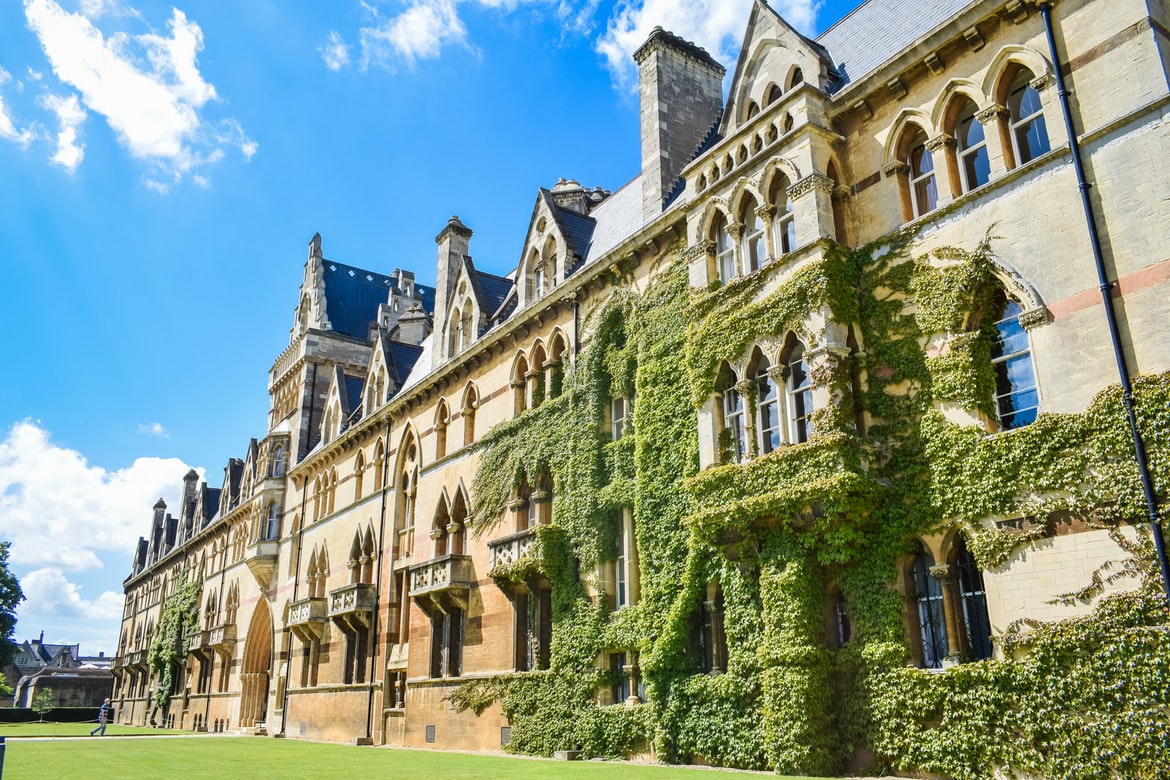
    Oxford University was founded in 1264. It is often called the “Mother of All Schools” as it is the first university in England and one of the oldest universities in the world. The university has a rich heritage that includes many famous alumni such as J.R.R. Tolkien, Bill Gates and Stephen Hawking.

    The University of Cambridge was founded in 1209. It is also one of the oldest universities in the world, with a history of over 800 years. The University has produced many distinguished alumni such as HRH Prince Charles (Prince of Wales), HRH Prince William (Duke of Cambridge), HRH Prince Harry (Duke of Sussex).

    Universities of the United Kingdom are among the most prestigious educational institutions in the world. The most famous British universities such as Oxford and Cambridge universities are among the best universities in the world.

    The University of Oxford is a public research university located in Oxford, England. It was founded in 1167, making it one of the oldest existing universities. It has an endowment of £8 billion, making it one of the richest institutions in Europe.

    The University of Cambridge consists of 31 autonomous colleges and six academic faculties. It is often called one of the best universities in the world, with alumni including John Milton, Stephen Hawking and more than 100 Nobel laureates.

    Oxford and Cambridge are two of the most famous British universities. They were founded in the 12th and 13th centuries respectively and are both located in England. Oxford is one of the oldest universities in the world and Cambridge is one of the best research universities in the world.

    The University of Oxford has a long history as a prestigious institution of higher education. It was founded in 1096, making it the oldest university in both the UK and Europe. The University employs over 4,500 staff and has over 25,000 students studying on campus at any one time. In addition to academics, Oxford is home to a variety of sports clubs, including rowing and rugby teams, which compete nationally with other institutions from England and around the world.

    Cambridge University was founded in 1209 by scholars who left their studies in Oxford due to an outbreak of disease that claimed the lives of many students. Cambridge is also known for its prestigious academic reputation as well as its beautiful architecture, which

    Oxford University is one of the oldest universities in the world. It was founded in 1096 and is located in Oxford, England.

    Cambridge University was founded by Henry VIII in 1546 and is located in Cambridge, England.

    Oxford University is one of the oldest universities in the world and also one of the most famous. It was founded in 1096 and today has about 20 colleges that are scattered over a large territory.

    Cambridge University was founded in 1209 by a group of scholars who were dissatisfied with teaching in Oxford. They wanted to create an academic community where everyone could study freely. Today Cambridge has 31 colleges spread over 260 hectares of land.

    Oxford and Cambridge are among the most prestigious universities in the world.

    Oxford is a public research university in Oxford, England. It is the oldest university in the English-speaking world and one of the most prestigious universities in the world. The university consists of 38 colleges and 6 permanent private halls, making it a unique institution for teaching and research.

    Cambridge (official name – Chancellor, Masters and Scholars of the University of Cambridge) is a public research university in Cambridge, England. Founded in 1209 as an early medieval educational institution, it is often one of the most prestigious academic institutions in the United Kingdom.

    Cambridge and Oxford universities are the two most famous educational institutions in the United Kingdom. They were established in and respectively.

    Cambridge is one of the oldest universities in the world and it has been ranked as one of the best universities in the world. It is also a member of an elite group of institutions that make up the Oxbridge academic community.

    Oxford University, on the other hand, was established by a group of scholars who wanted to create a place where they could study without being disturbed by religious rules or interference from monarchs.

  • Tips to Pick the Right English Schools

    Education is surely one of the most important stages of human development and growth. It heavily impacts the future of children and so it is significant to pick the right English school. The task is not easy, and it should be taken seriously.

    Our informative article will be useful for all parents, who choose a school for their children. In case you opt for the wrong option, your kid may suffer afterward. Perhaps the curriculum, environment, methods of learning, and other factors will not suit him or her. As the boy or girl grows up to learn in college, he or she may not be able to cope with stricter standards of higher education. You would surely like your kid to do everything on his/her own, instead of requesting online help – Who can do my college essay? That is why the selection of an English school must be perfect! We will explain how to do that properly here below. Be attentive and try not to miss vital points.

    Check the Choices

    Not all parents know that there are various types of schools. Each type has certain peculiarities that may help you to define the best option. Here are the major types:

    Charter Schools
    Magnet Schools
    Online Public Schools
    Private Schools
    Homeschools
    Alternative Schools

    The choice is vivid, isn’t it? Perhaps your kid feels better studying at home or online (which also means homeschooling, but with a flexible schedule). Check these options to find out which one is more beneficial.

    Find a Good Fit

    The second step is to learn as much as possible about the methods of learning at a certain school. We have already mentioned various types. When you select a school, you need to be sure your kid will get what he or she needs. There are vital points you should check. These are as follows:

    • Academic level – what level of difficulty is suggested by a school?
    • Social needs – does your kid need social ties with peers or is it better to study at home?
    • Practical matters – what are the main activities, common schedule, extracurricular, and something of the kind?

    These points will tell you a lot about the benefits that are offered by a certain institution. Of course, you need to pick the main focus. It may be learning English and foreign languages, as well as other academic directions.

    Check Feedback

    You should know that you can check the reputation and rating of every school in the United States of America. You must use this possibility to your advantage. This can be done by reading authoritative newspapers, special rating agencies, asking other people who dealt with a certain school, and so on. There are various options, and it is vital to use them all. It will be a powerful combination that will provide you with different facts and points of view.

    Make a List and Follow It

    When you look for a suitable option, be sure to have a list. It should be the expectations you and your child have. If your child is a young adult, he or she definitely understands what he/she needs. That is why his/her opinion also counts. Here are the points to consider:

    ● Curriculum;

    ● Teacher staff;

    ● Methods of teaching;

    ● Communication between teachers and parents;

    ● Social communication between peers;

    ● Prospects for higher education;

    ● Facilities and activities, etc.

    This list should be your guide. Every time you review a new option, check if it suits your list of expectations.

    Visit It

    Of course, you simply cannot select English schools sitting at home. Online research and option of people you may know are vital, informative, and dependable. Nonetheless, we all are different and may have different attitudes towards the same place of learning, the methods it encourages, and so on. That is why you should visit every single school on your shortlist!

    Ask the Right Questions

    When you are on a visit to a school, you have a great opportunity to ask the questions that must be asked. Every school has special days when anticipated learners and their parents may come for a visit. It’s a good chance to ask the teaching staff, the principal, and other parents. Here are vital questions you may ask:

    ● How are teachers trained?

    ● Are they supervised? How?

    ● How do you regulate behavioral issues at school?

    ● What are the methods of improvement of the curriculum?

    ● How much homework is assigned?

    The Bottom Line

    You should always select the school for your kid(s) carefully and without haste. You ought to be 100% confident that everything offered by a certain school suits the needs and talents of your kid(s). Otherwise, children may face serious obstacles as they grow up. Stock to the smart tips and recommendations highlighted in our informative article. They will surely help you find the right English school!

  • Choosing The Best University in London

     A multicultural and diverse metropolis, a hub for economic and academic activities, and a    great tourist attraction, London is surely one of the most well-known capital cities for students in the UK as well as abroad. 

     London is not only a top tourist attraction and a well-developed capital city but a renowned center of higher education for international students. London education is ranked in the top 5 cities for higher education globally. London is home to more than 40 prestigious universities, studying in London means more international exposure and a greater chance to achieve your dream career. Below is a list of the top London Universities and their benefits.

    The Most Famous London Universities

    1. Imperial College London 

    Speaking about London education and not including “Imperial College London” wouldn’t be fair. ICL is a top-notch London University that ranks in the top 10 universities throughout the globe. Established more than a hundred years ago, Imperial College London is an excellent institute for research in scientific fields and pursuing a well-recognized degree. Studying at ICL ensures a great blend of education, knowledge, experience, and future opportunities.

    1. University College London

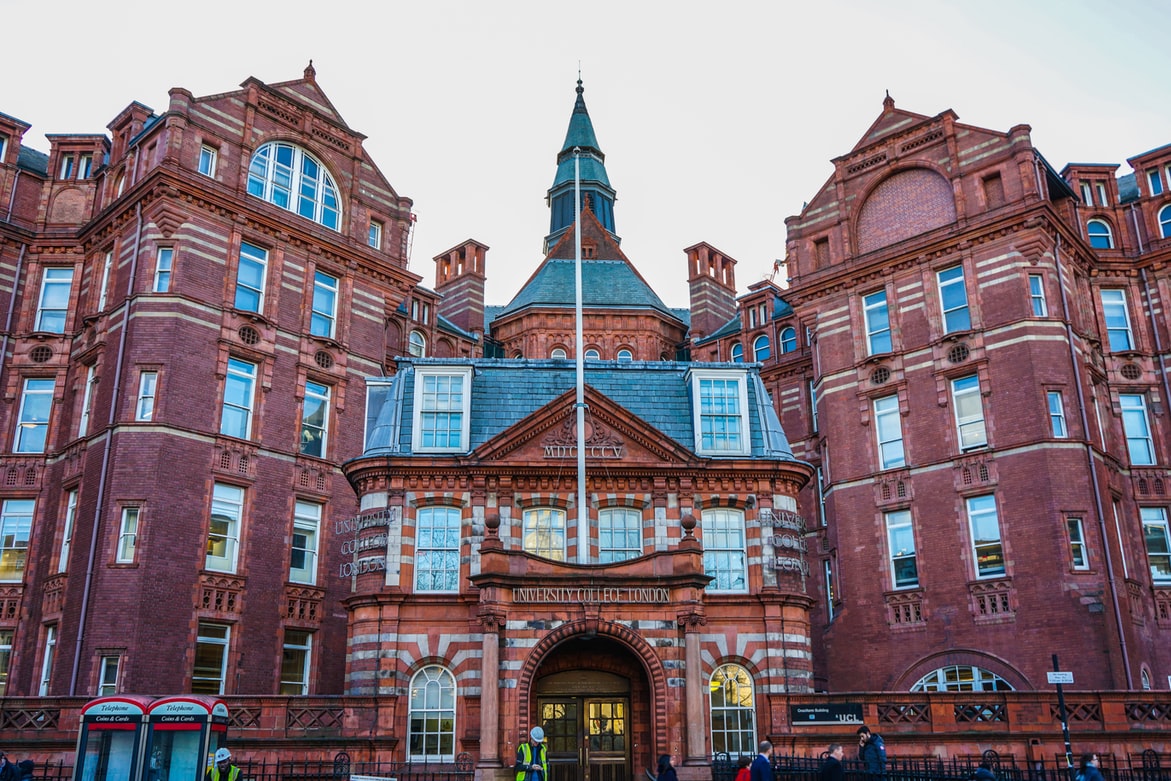
    The only institute in London that stands side by side with ICL is University College London. The only difference being is it was found more than 80 years before ICL. University College London has the honor of being the first London University. Attracting students from almost 160+ countries, UCL has come a long way round. With about 30 Nobel Prize Winners in its Alumni, UCL is proud of its hardworking staff and exceptional teaching skills.

    1. London School of Economics and Political Science

    If you see your future in social and political sciences, then there will be no better London university than LSE. LSE has highly trained scholars and professors to guide you towards excellence. Furthermore, lectures are delivered by current and ex-politicians to help you chase your dream. Many influential politicians graduated from LSE.

    1. King’s College London

    King’s College London is a prestigious institute for higher education that was established by King George IV and the Duke of Wellington around 200 years ago. It is ranked as one of the top London universities and appears in the list of top 25 universities globally. A whole world of opportunities is provided for research and academics.

    1. Queen Mary University London

    This university was founded in the 18th century by a huge merger of four prime universities. It is a top-notch research-based university that caters to more than 25000 students around the globe. QMUC has a special reputation when it comes to medicinal sciences and dentistry.

    Famous People Who Studied in London

    The number of prominent and influential people who acquired a London education is exceptional.

     Many Nobel Prize laureates including the social justice fighter Nelson Mandela, the youngest Nobel prize winner Malala Yousafzai, the Father of Modern Science Albert Einstein, Ronald Coase, Wole Soyinka, and many more graduated from London Universities.

    Indira Gandhi, Mahatma Gandhi, and John F. Kennedy are some famous politicians who are graduates of London universities.

    Some celebrities like Adele, Dua Lipa, Tom Holland, and Sarah Parker have also acquired a London education.

    Peculiarities of Education in England

    Formal education is compulsory and free for all children in England until 16 years of age. The education system of England has been divided into 4 main parts: Primary education (Age 5 to 11), Secondary Education (Age 11 to 16), Further Education, and Higher Education. The strongly regulated education system in England is the reason for its 99% literacy rate.

    Prospects After Graduation

    England is the 6th largest economy globally with a workforce of more than 30 million people. According to statistics, the unemployment rate in England was about 4%, which is its lowest in forty years. This is the reason; most students studying in London plan to get a work visa and achieve their dream career.

    Unlike the Northern parts of England, employment is very high in London and there are ten times more jobs than in any other part of the country, but as expected, the competition is still very high.

    The biggest sectors in terms of employees in the UK are:

    • Healthcare
    • Education
    • Research work
    • Administration
    • Raw materials
    • Wholesale
    • Retail
    • Media

    Pros and Cons of London Education

    Pros 

    1. Life in London

    London is a city that is filled with people of different ethnicities, nationalities, races, and cultures. Living in London means living the best of your life and experiencing the complex history, diverse culture, food, architecture, and some beloved tourist attractions.

    1. Economic Hub

    London, the capital city of England is an economic hub. Studying in London allows you to be in a place where you can build your experience, social skills, and many more. You can also acquire a couple of diplomas and certificates that will further ease you in your professional life.

    1. Academic Hub

    London has more than 40 universities with hundreds of courses and programs to choose from. London has more universities than any city in the UK. About 4-5 of them make it to the top 50 higher education institutes globally.

    1. Nature

    Don’t be surprised when you see a lush green park every 100 meters. There is no place without a shade of a tree. Studying in London will allow you to be in close contact with nature and improve your health.

    1. International Exposure

    Studying at a London university will give you international exposure and a chance to be an internee in huge companies like Barclays, Unilever, BBC, CNN, GSK, AstraZeneca, Amazon, and many more. Here, students can train and get a taste of practical life.

    Cons

    1. Cost of Living

    The cost of living in London can be really expensive for students that are not local. Although there is a smooth public transport network, sometimes traveling from A to B can be expensive. If you plan to study in London, then you should have a good budget or a scholarship that covers your expenses and provides a handsome stipend.

    1. Problems of a Big City

    London is a big capital full of hustle and bustle. A lot of traffic in the streets, noise pollution, air pollution, and intense lighting can make your day very hectic.

    1. Getting Admission

    Due to the great prestige and honor of London universities, there is a great demand and competition since every student is trying to get in. This makes getting admission a very tough process. Most universities rely on nothing but your academic grades. Only expect an interview if you are an A* student.

    1. Demand for Professionals

    Although stated above that London is an economic hub, companies demand professionals rather than students. In order to get a job as a student, you need to have many connections and be a part of many societies.

  • Famous people who studied at the top universities

    When it comes to finding the best universities in the world, there are a few different ways to go about it. One way is to look at the most prestigious universities in the world. These universities usually have high tuition rates, and they are often very difficult to get into. However, they also offer some of the best educational opportunities in the world.
    Another way to look at the best universities in the world is by their rankings. There are a number of different ranking systems, and each one has its own criteria for ranking universities. The most popular ranking system is the Times Higher Education World University Rankings. This system ranks universities based on a number of factors, including research output, teaching quality, international outlook, and more.
    Finally, you can also look at the rankings of specific programs or departments at universities. For example, the best engineering schools in the world are often found at the best universities. Or, the best medical schools might be found at different universities than the best business schools.
    No matter how you decide to look at it, there are a number of universities that stand out as the best in the world. Here are some of the top universities, based on their rankings:
    1. Harvard University
    2. Stanford University
    3. Massachusetts Institute of Technology (MIT)
    4. University of Cambridge
    5. University of Oxford
    6. California Institute of Technology (Caltech)
    7. Princeton University
    8. Yale University
    9. Imperial College London
    10. Swiss Federal Institute of Technology Zurich (ETH Zurich).

    World university rankings

    There are many different factors that go into making a university one of the best in the world. Some of these factors may include the quality of the professors, the research opportunities available, the amount of funding a school has, and the number of prestigious awards it has won.

    However, there is no guaranteed formula for becoming one of the best universities in the world. Each institution has its own unique strengths and weaknesses. Some schools may focus more on undergraduate teaching, while others may have a stronger research focus.
    There are a number of ways to find out which schools are considered the best in the world. One popular resource is the Times Higher Education World University Rankings. This annual publication ranks the top 1,000 universities in the world based on a number of factors, such as teaching, research, international outlook, and industry income.

    Other rankings that are commonly cited include the QS World University Rankings and the Shanghai Jiao Tong Academic Ranking of World Universities. It is important to note that these rankings may not be the best indicator of a school’s quality, as they are often influenced by factors such as how many students a school enrolls and how much research it conducts.

    If you are interested in studying at one of the best universities in the world, your best bet is to do some research on your own and ask around. Talk to your family and friends, and see if they know anyone who has attended one of these schools. Ask the schools themselves for information on their programs and what sets them apart from other universities.
    No matter which school you choose, make sure to take advantage of all the resources it has to offer. The best universities in the world are some of the most prestigious and well-funded schools in the world, so you are sure to get a top-notch education if you attend one.

    Famous people from the world’s top universities

    Bill Gates, Harvard University
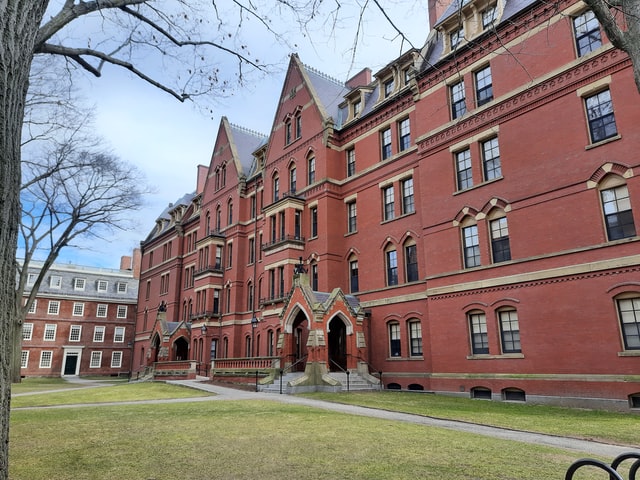
    Bill Gates is one of the most successful businessmen in history, and his alma mater, Harvard University, is consistently ranked as one of the best universities in the world. Gates started Microsoft Corporation with Paul Allen while he was still a student at Harvard and quickly became a household name.
    Mark Zuckerberg, Harvard University
    Like Gates, Facebook founder Mark Zuckerberg also attended Harvard University. While he was a student there, he created one of the most popular websites in history. Facebook has now become a global phenomenon, with over 2 billion active users.
    Stephen Hawking, University of Cambridge
    Renowned physicist Stephen Hawking is a graduate of the University of Cambridge, which has been ranked as the best university in the world for the past two years. Hawking is considered to be one of the most brilliant minds of our time, and his work on black holes and relativity has made him one of the most celebrated scientists of all time.
    Oprah Winfrey, Tennessee State University
    Oprah Winfrey is an American media mogul and philanthropist who attended Tennessee State University before starting her career in broadcasting. She is the richest African American of the 20th century and has been honored with numerous awards, including an Oscar and a Golden Globe.
    Malala Yousafzai, University of Oxford
    Malala Yousafzai is a Pakistani activist who was shot in the head by the Taliban at the age of 15 for promoting education for girls. She survived the attack and went on to become a global advocate for women’s rights, eventually being awarded the Nobel Peace Prize. Yousafzai attended the University of Oxford, where she continued her activism before becoming the youngest-ever UN Messenger of Peace.

    These are just a handful of the famous people who have attended universities that rank in the top 10 according to the Times Higher Education World University Rankings. There are many other notable alumni, including world leaders, CEOs, and Olympic athletes. No matter what your field of interest may be, there is sure to be a world-renowned university that can help you reach your goals.

loader
Top